
How do AI voiceovers compare to human voiceover artists? A Case Study with Crossen Engineering.
Are AI Voiceovers any good?
How good are the voice options?
Does it actually save any time and money?
How does it compare to a human voiceover?
We decided to find out.
Working in Partnership with Crossen Engineering
We worked in partnership with Crossen Engineering as we wanted to compare the process and quality of an AI voiceover to a human voiceover artist.
We had worked with human voiceover artists for previous Crossen Engineering projects and this provided a good opportunity for comparing the two approaches.
Here is one of the videos for Crossen Engineering that features a human voiceover.
The AI Voiceover Project - Sustainable Materials
The AI voiceover was used on a video showcasing how Crossen Engineering can use sustainable materials in the manufacturing process to help customers reduce the environmental impact of their products.
The video shows customers the options available at the product design stage if there is a requirement to reduce the carbon emissions associated with the product manufacturing process.
Execution of the project was a 5 step process:
1 – Developing the ‘casting call’
2 – Choosing an AI voiceover platform
3 – Collecting voice samples for review by the client
4 – Making the final AI voice selection
5 – Producing the AI voiceover
Step 1: Developing the ‘casting call’
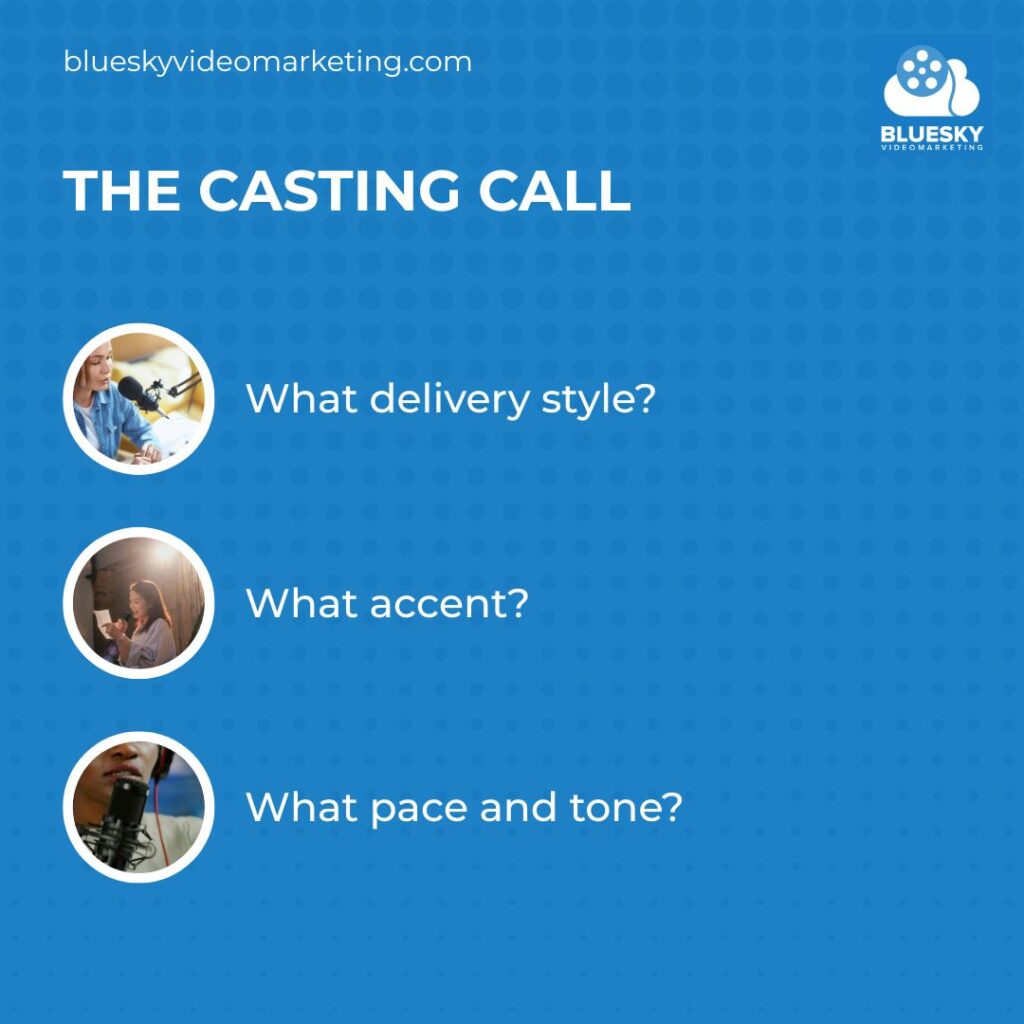
The first step in the process was asking ourselves what exactly were we looking for?
What was the preferred delivery style?
What sort of accent did we want our AI voiceover to have?
Is there a specific pace and tone required?
Asking these questions allowed us to develop a casting call for our AI voiceover artist – the same way we would for any project using a human voiceover artist.
After deciding on Artlist as the platform, we talked with Crossen Engineering and decided that a female voiceover would work best for this project.
Having worked on previous projects using a male voiceover artist we decided to test out a female voiceover so see if the video would perform any differently.
So how does this project compare to when we’re using a human voiceover artist?
So far we’ve used the same creative process as we would have when finding a human voiceover artist.
Because of this there have been no savings or efficiencies so far.
We can’t comment on the quality of the voiceover versus a human voiceover artist yet as we have not made our selection.
Step 2: Choosing on an AI voiceover platform
The next stage was deciding which AI voiceover platform we would use for this project.
We previously used the AI Voiceover tool on Canva to work on a tutorial video project with another customer.
S&E CareTrade wanted us to create a training video showing how to manage spills and stains in care environments.
After looking at several of the AI Voice options available and talking with the team at Crossen Engineering, we decided on Artlist’s AI voiceover software.
We decided on Artlist as it has a much more comprehensive voice library than Canva and presented more options in terms of pace, tone, accents and delivery style.
Going back to our casting call, the first preference was for an Irish accent but Artlist didn’t offer Irish accents so we collectively agreed on a neutral English accent.
This was the first compromise we had to make on this project.
Step 3: Collecting voice samples for review by the client
Following the decision to use a female voice, we went through the available voices on the Artlist platform.
From this selection, we picked four voices that we thought would work best for the project based on the pace and tone that Crossen Engineering were looking for.
To create the samples for the Crossen Engineering team, we then ran the same part of the script through each of the four selected voices.
This allowed the client to compare the options directly before making a final decision.
Have we noticed any differences from selecting a human voiceover artist here?
Restrictions on available accents
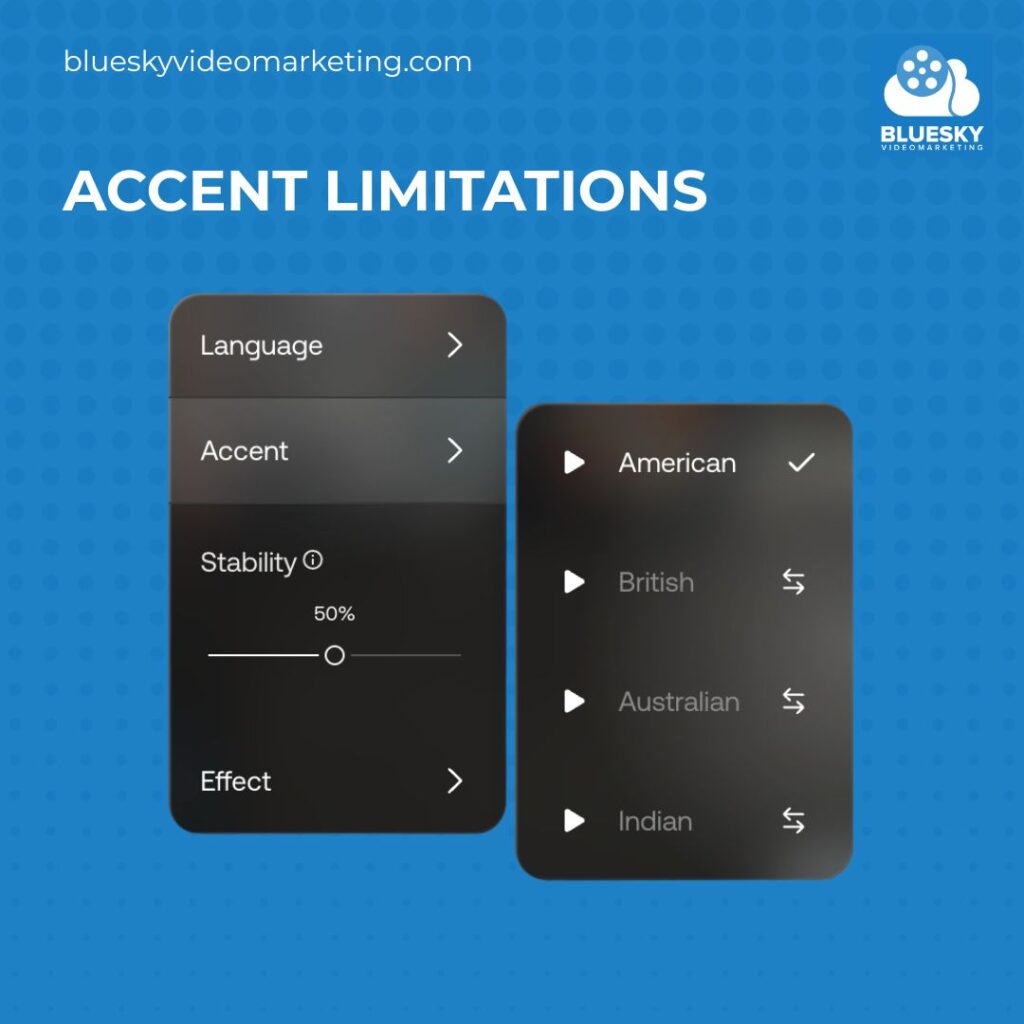
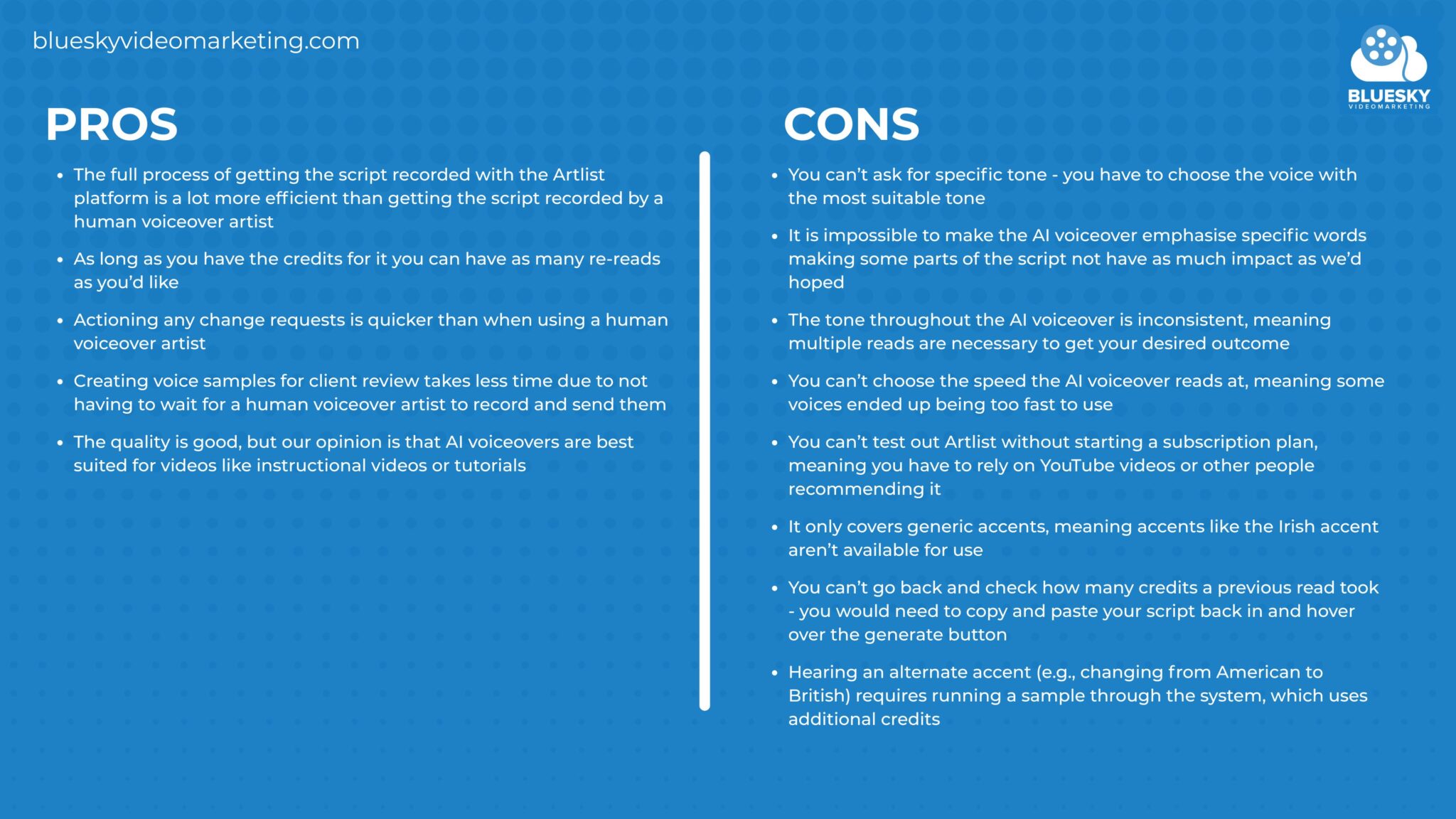
The main difference we noticed was not being able to select specific accents but rather having to select from a short list of generic accents.
There is obviously not the level of demand on Artlist (and most other AI Voiceover platforms) to justify building a library of Irish accent options.
This could cause problems with future projects if people are looking for a specific accent that is yet to make the list.
Efficiencies in the creative process
The process of creating voice samples for review by the client did take less time than when using a human voiceover artist.
This was a result of not having to wait for sample reads to be recorded by the human voiceover artist and then sent to us.
However, using the AI voiceover was slightly problematic here as in order to get sample reads we had to use some of our subscription credits which added costs that would not have been incurred had we used a human voiceover artist.
Due to having to use additional credits for the AI voiceover samples we are yet to notice any savings in the creative process.
Step 4: Making the final AI voice selection
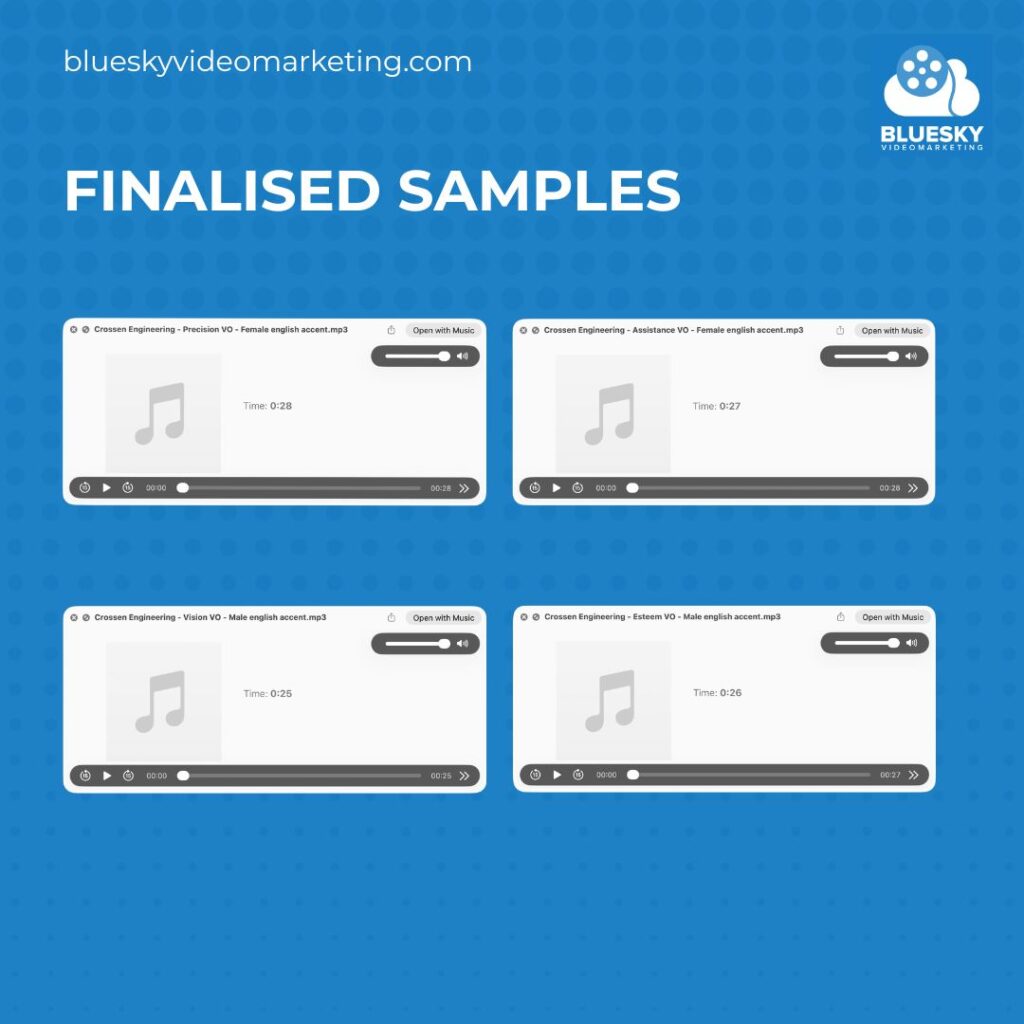
After settling on four options, we created and downloaded the voiceover samples to send to Crossen Engineering.
Something that we discovered was that when we ran the script through the platform, the resulting voice became higher pitched or slightly faster than the original sample.
Another hurdle we had to overcome was if we selected a voice that was originally an American accent, the only way we could hear the British accent was if we ran the sample through the Artlist platform which required us to use more of our subscription credits.
Step 5: Producing the AI voiceover
Once the client made their choice on the AI voice that they liked, we then moved on to producing the full AI Voiceover from the script that we had developed with the client.
The first thing we had to do was adjust the format of the script to ensure we ended up with a clean, professional read that was of sufficiently good quality to use on the project.
This meant removing the spaces between lines and changing some of the punctuation to ensure there was enough of a gap between some lines of the script.
Due to the inconsistencies of tone and speed, this took 4 attempts before we were happy with the quality of the AI voiceover.
As each attempt required additional credits this used a lot more credits than we had originally anticipated.
Missing words from the script
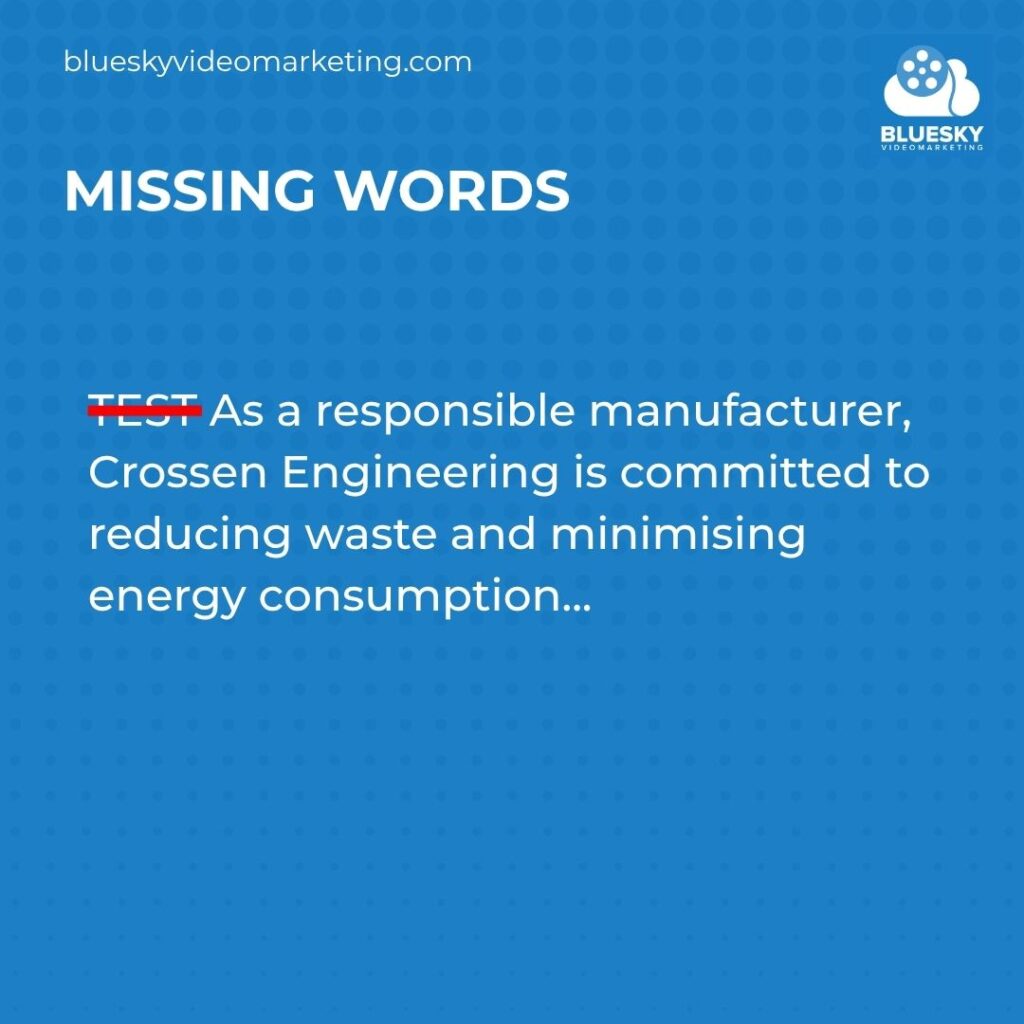
We also noticed that the Artlist AI Voiceover had a tendency to cut off the first word of the script.
The workaround we developed for this was adding a filler word at the beginning which we could then cut out in the edit.
This is obviously not something that you have to worry about when working with a human voiceover artist.
Pronunciation issues
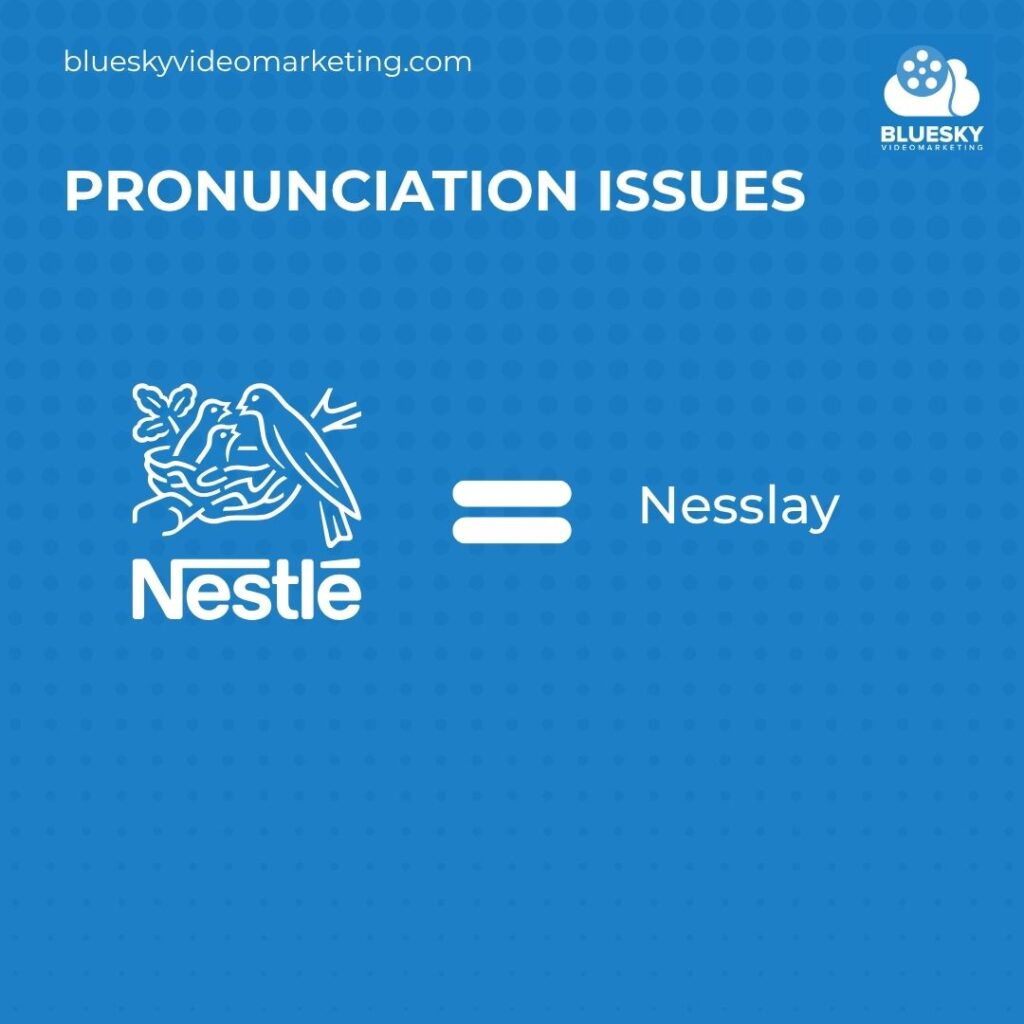
The Artlist AI voiceover platform also struggled to pronounce certain words.
One example from our script was the brand, “Nestle”
We had assumed (incorrectly) that because Nestle is such a large, globally recognised brand the Artlist AI platform would understand how to pronounce it correctly.
When this situation occurred we resolved it by phonetically changing the spelling to “Nesslay” and running it back through the system.
So what is the comparison now?
The speed of delivery for the final voiceover was definitely faster than we would receive from a human voiceover artist – despite having to run it through the Artlist platform several times, we had the final voiceover recording delivered within 8 hours.
Actioning any change requests was also quicker than when using a human voiceover artist as we were able to make whatever changes were required very quickly.
However, the costs associated with creating the final voiceover script continued to increase.
Due to us having to run the script through the system multiple times and go back with specific words, the amount of credits required for the project was building up quickly.
In creating the voiceover recording, there has definitely been time saved but it has required a higher cost than we initially anticipated.
The Final Analysis
So how long did the whole process take?
Was it any faster?
How did the quality compare to a human voiceover artist?
Was it any more cost effective?
How long did it take?
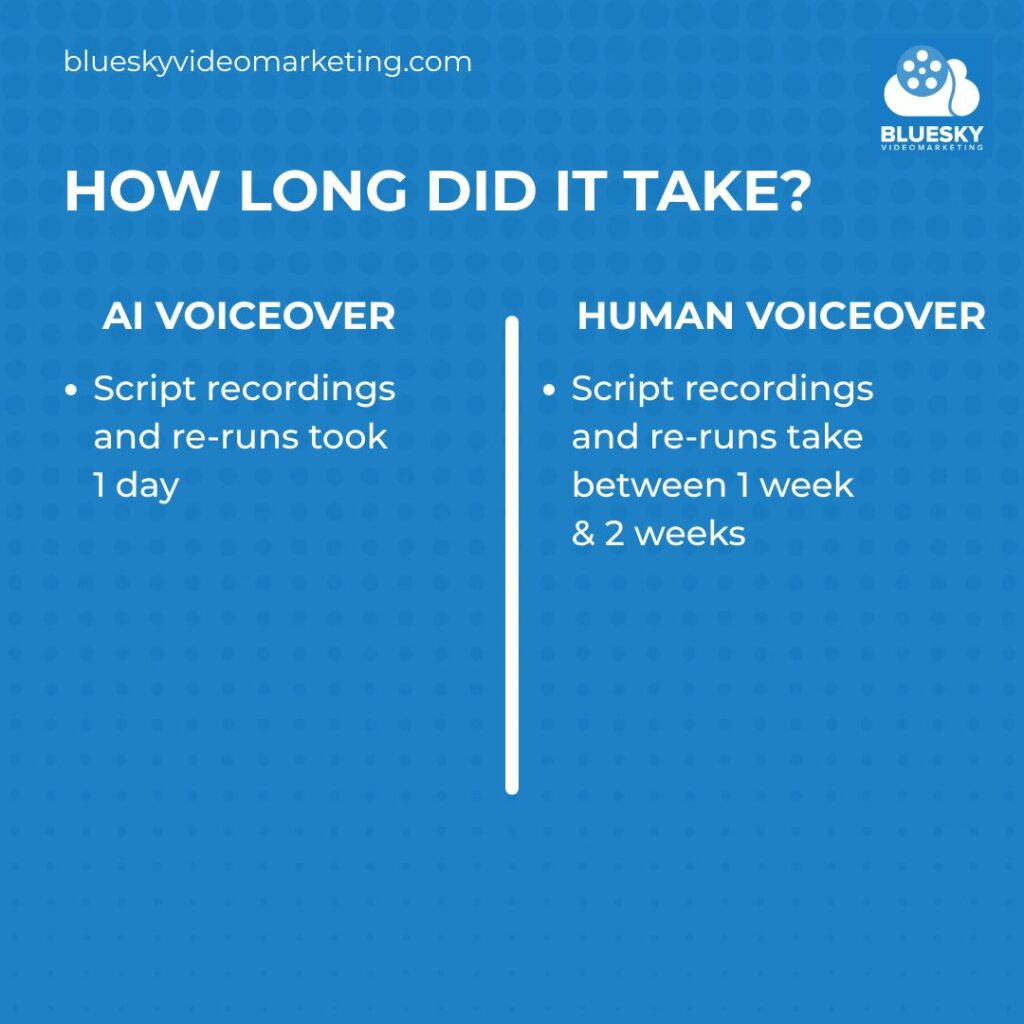
The entire process of creating the AI voiceover, including creating the samples, re-formatting the script, multiple runs of the script and correcting mispronounced words took around 2 days.
Getting the script recorded and any re-runs was a lot quicker, equating to 1 day, when using the Artlist platform in comparison to getting a human voiceover artist to record the samples, send them to clients, get full scripts recorded, get any changes made and receive the final files, which usually ends up taking a minimum of 1 week and in most cases, closer to 2 weeks.
How did the quality compare to a human voiceover artist?
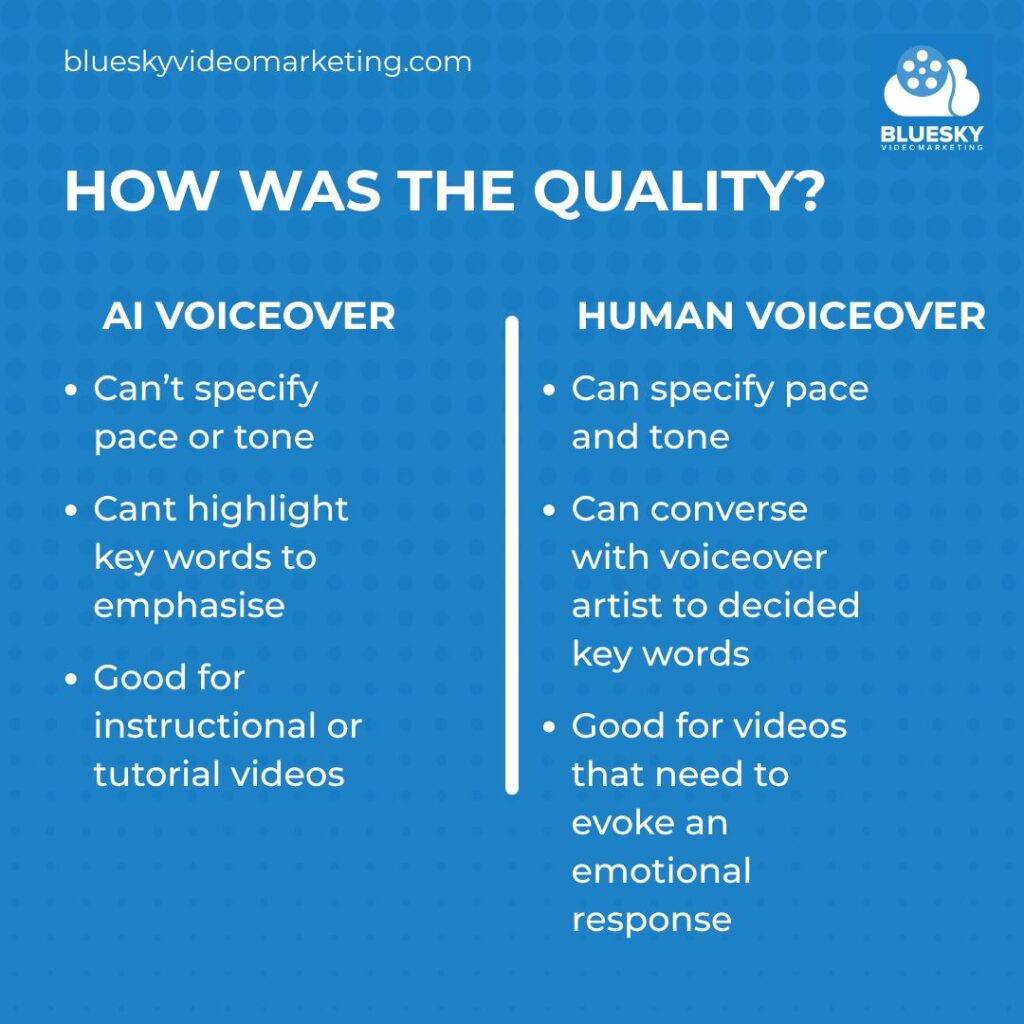
The quality of the AI voiceover is not as good as when using a human voiceover artist and there is also an issue with how interactive the process is.
With a human voiceover artist you are able to have conversations around pace and tone as well as identify key words that should be focused on during their delivery.
Our experience on this project was that these options are not available using the Artlist platform.
We can see how these AI Voiceovers could be applied to instructional or tutorial videos quite effectively – but where there is a requirement for a storytelling approach or a need to try and evoke an emotional response from the viewer, human voiceovers remain the best option.
Was the AI voiceover any more cost effective?
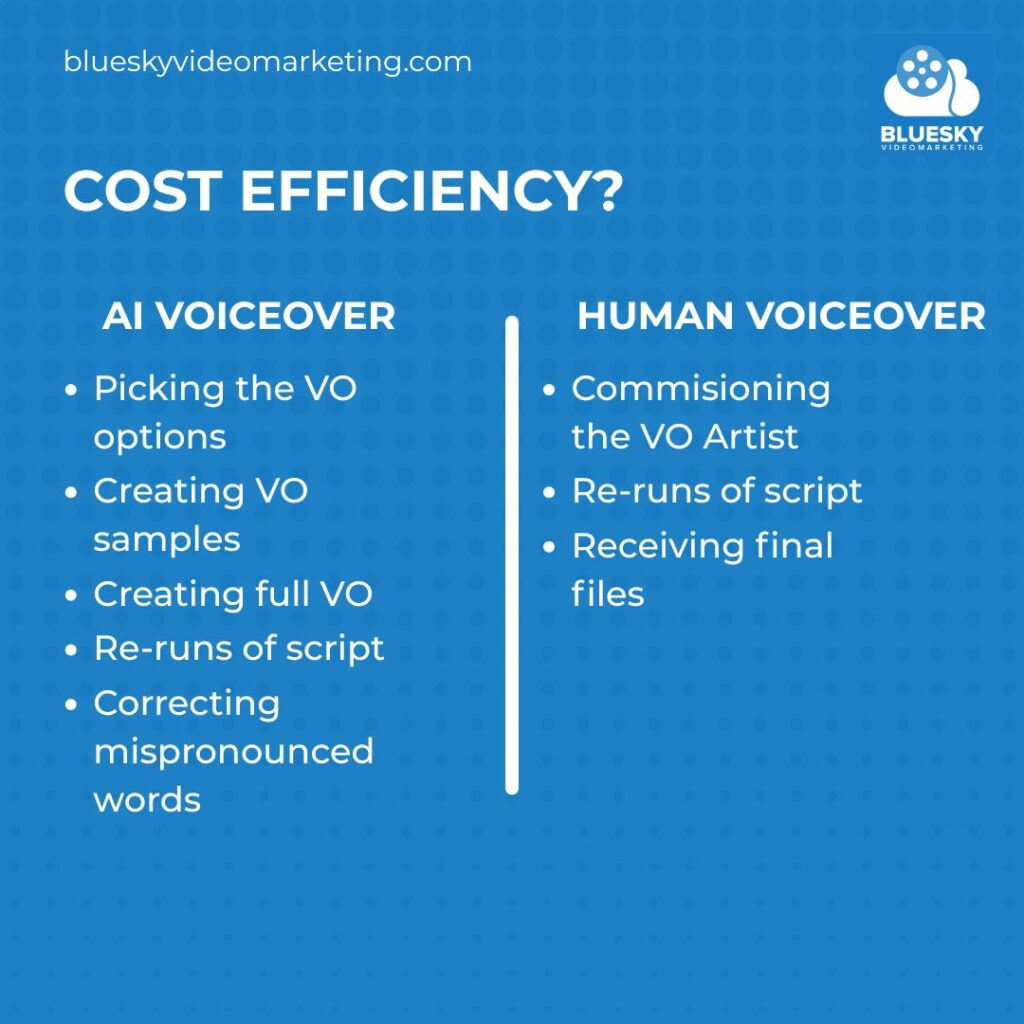
Our experience on this project suggests that the costs of a human voiceover artist and an AI voiceover are broadly similar.
Rather than commissioning a human voiceover artist to record the script, our team spent a significant amount of time creating voice samples and producing the final voiceover (which took several attempts).
After you have run the script through the platform several times and re-run specific words, the cost of the credits quickly builds up, making the AI voiceover more expensive than originally anticipated.
Pros and Cons of AI Voiceovers
Check out the full video
If you’re curious about how the AI Voiceover really sounds, check it out for yourself!